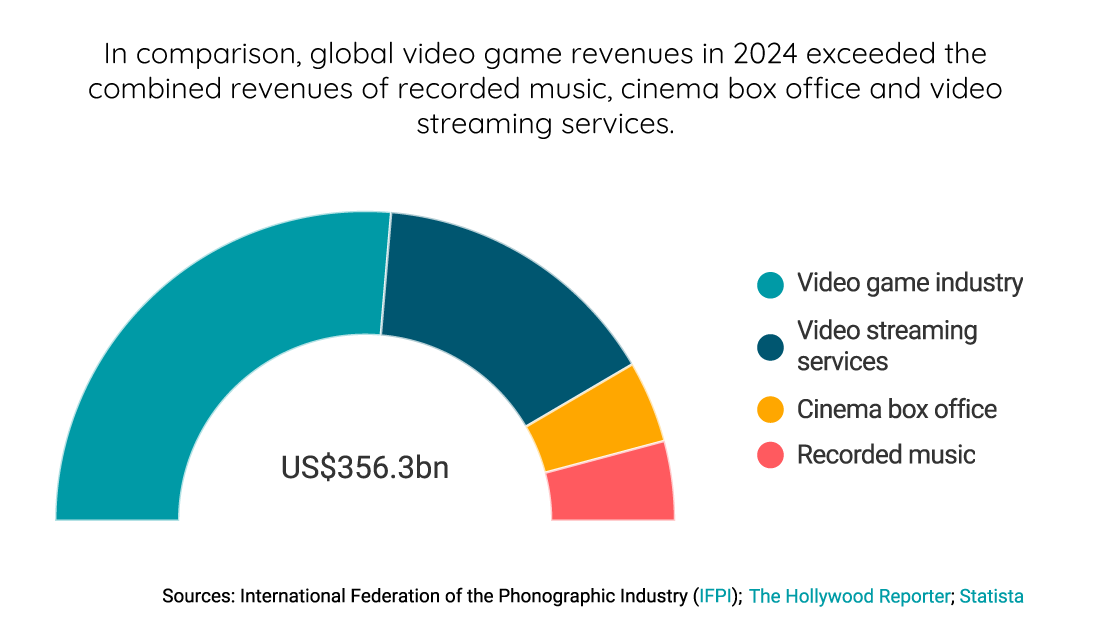
Video gaming has evolved into a major global industry, generating more revenue than music and film industries combined.
In the absence of specific video games legislation in the EU, the industry players and authorities must keep abreast of a fragmented but increasingly dense regulatory environment, where copyright, end-user protection (notably for minors), sustainability and competition rules jointly impact the design, monetisation and distribution of games.
Key takeaways
- Video game content and platforms are potentially impacted by a range of horizontal EU rules, such as copyright rules, the Digital Services Act, the Audiovisual Media Services Directive and the proposed Regulation on Child Sexual Abuse Online.
- Apple and Google’s app store practices have prompted antitrust action, now complemented by the Digital Markets Act, which directly affects the conditions for distributing mobile games.
- The performance and uptake of cloud gaming depend heavily on the availability and quality of very high-speed broadband, bringing EU fixed and 5G mobile broadband policy into focus.
- EU sustainability rules bring video gaming hardware and infrastructure within the scope of ecodesign, energy efficiency, right-to-repair and reporting rules, alongside voluntary industry agreements.
Scope
Cullen International’s special report published in December 2025 explores the gaming value chain, with a focus on the application of regulation and competition law in the EU across four areas:
- content, including copyright, end-user protection, market concentration and merger control;
- distribution, with an emphasis on regulatory and antitrust issues linked to app stores;
- cloud gaming, focusing on telecoms-related aspects such as quality of service (QoS) on 5G mobile networks; and
- gaming equipment, covering sustainability-related issues.
For more information and access to the full report, please click on “Access the full content”, or on “Request Access”, in case you are not subscribed to our Europe Media service.
more news
10 June 26
Digital identity systems: governance, regulation and emerging trends
Digital ID systems are becoming key enablers of digital economies, supporting access to public and private digital services. Cullen International's new report explores the different governance mechanisms applied across the world, as well as different architectural designs.
05 June 26
Alternative delivery operators mostly remain outside postal regulation
Our new European benchmark provides information on whether alternative delivery operators are considered as postal service providers.
01 June 26
Privacy in the digital age
Our latest benchmark compares data protection laws across 14 jurisdictions. It covers recent legal updates, lawful bases for processing personal data, and extraterritorial applicability. It also examines privacy rules for location, biometric, and children’s data, as well as enforcement practices involving these data types and big tech groups.