Most major car manufacturers have set a carbon neutrality target, with many setting a target date of 2050. Other manufacturers have put forward net-zero carbon emission targets or net-zero greenhouse gas (GHG) emissions target.
Cullen International’s latest research shows that 18 studied manufacturers have widely varying levels of emissions, with more than half of them having published historic data that allows the tracking of their emissions over time. Where such data is available, companies seem to have increased their total emissions (with some notable exceptions). This contrasts with the previous version of Cullen’s analysis which found that emissions were largely decreasing.
EU regulations on CO2 emission standards for new cars and light vehicles ban the sale of new petrol and diesel cars in the EU from 2035. Hyundai Motors, Kia and Mitsubishi committed to this requirement in their sustainability reports. Most manufacturers are increasing their efforts to produce and sell more electrified vehicles.
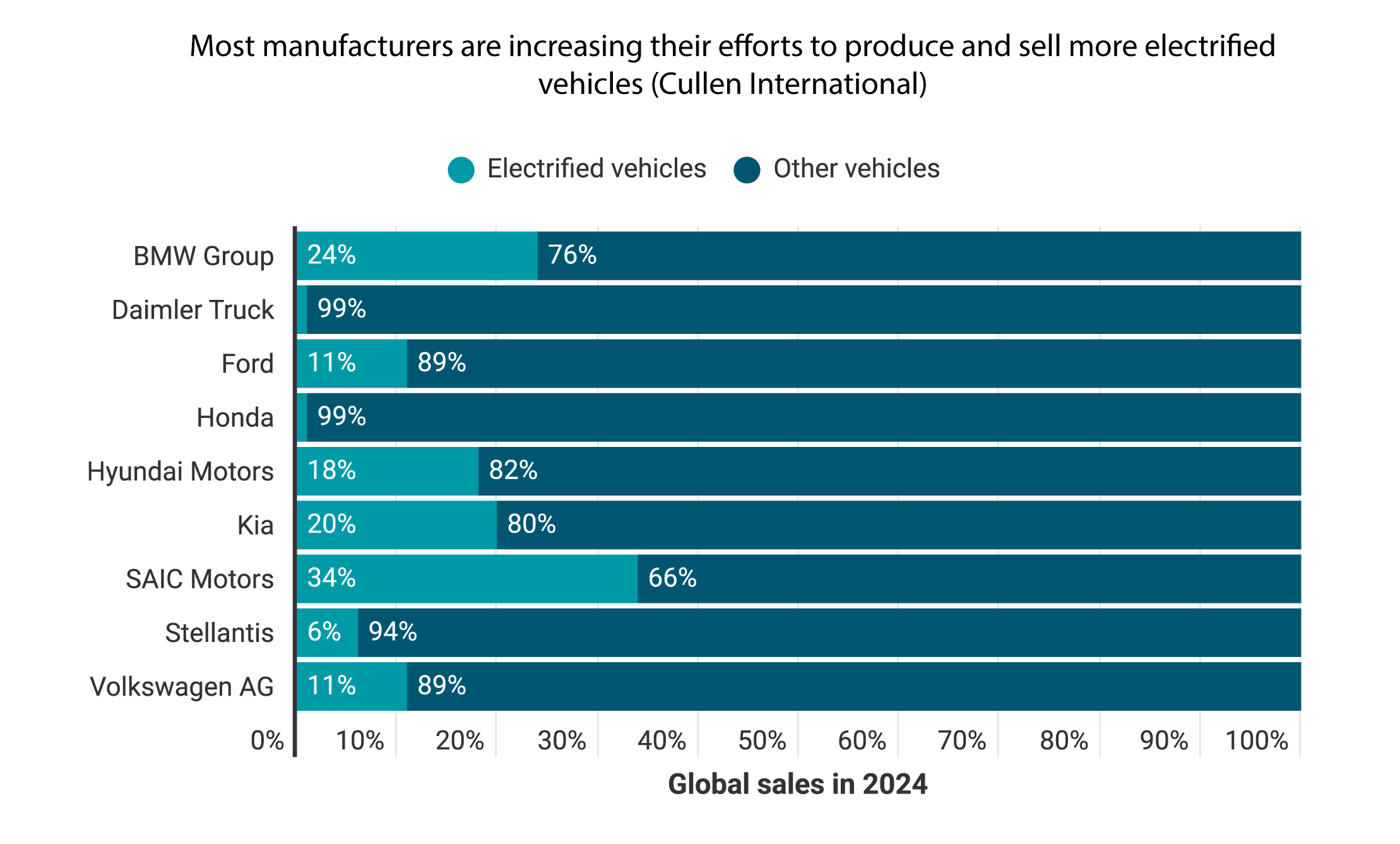
The latest update of the Cullen International’s benchmark summarises the sustainability targets put in place by major car manufacturers.
The benchmark covers:
- whether the companies have set a target year to reach carbon neutrality;
- whether the target includes scope 3 (indirect) emissions;
- the current level of emissions compared to the target base year; and
- some further details behind the targets and plans, such as the proportion of electrified vehicles manufactured.
For more information and access to the benchmark, please click on “Access the full content” - or on “Request Access”, in case you are not subscribed to our Sustainability service.
more news
04 November 26
In nine European countries, national symmetric obligations on access to ducts go beyond the scope set by the Gigabit Infrastructure Act
Cullen International's latest benchmark analyses asymmetric and symmetric duct access obligations in Europe.
04 November 26
More than 60 cases and counting: a snapshot of European antitrust enforcement against big tech
Cullen International’s latest report on past and pending antitrust cases against big tech companies in Europe tracks enforcement activity under ex post antitrust rules at EU and national level.
30 October 26
Many governments around the globe rely on legal mechanisms to compel communications apps to cooperate in law enforcement investigations
Cullen International's latest Global Trends benchmark for number-independent communications apps regulation found that nearly all of the 13 surveyed jurisdictions around the world provide some legal mechanism to make these apps assist law enforcement in criminal investigations. There are requirements to verify user identities, compel disclosure of stored content, make encrypted content accessible, and duties to detect illegal content within private communications.