National regulatory authorities (NRAs) for telecommunications in Europe face different challenges to prioritise environmental initiatives and drive the sector towards more sustainable practices. Such challenges include the growing energy consumption of data centres and the need for harmonised indicators to compare sustainability data.
Most NRAs agree that they need a clear legal mandate entrusting them with environmental powers, as well as harmonised horizontal measures (e.g. through a code of conduct) to ensure that NRAs tackle the most pressing sustainability issues in the sector.
Only two NRAs have a specific legal mandate allowing them to collect environmental data. However, the number of NRAs with legal responsibilities for the environment could rise to four.
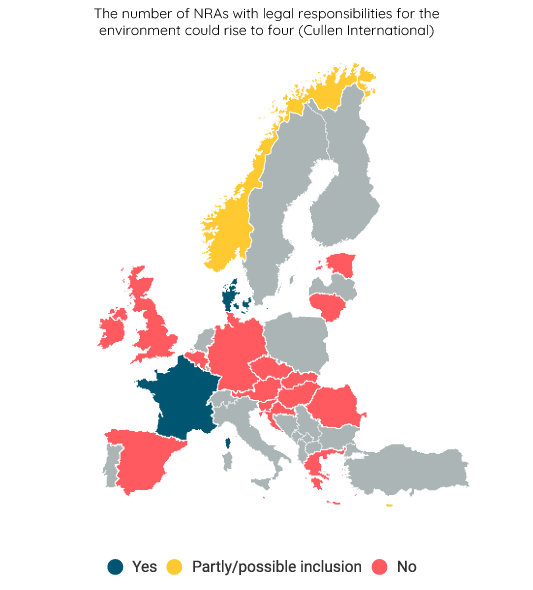
This Cullen International report presents data on the current environmental powers of telecommunications NRAs, their main challenges regarding environmental sustainability and their current sustainability priorities.
The report reflects the input and participation of 20 European NRAs, interviewed in the period from July to September 2025: RTR (Austria), BIPT (Belgium), HAKOM (Croatia), OCECPR (Cyprus), CTU (Czech Republic), DIGST (Denmark), ECPTRA (Estonia), Arcep (France), BNetzA (Germany), EETT (Greece), NMHH (Hungary), ComReg (Ireland), RRT (Lithuania), MCA (Malta), NKOM (Norway), ANCOM (Romania), RÚ (Slovakia), AKOS (Slovenia), CNMC (Spain) and Ofcom (the UK).
For more information and access to the benchmark, please click on “Access the full content” - or on “Request access”, in case you are not subscribed to our Sustainability service.
more news
04 November 26
In nine European countries, national symmetric obligations on access to ducts go beyond the scope set by the Gigabit Infrastructure Act
Cullen International's latest benchmark analyses asymmetric and symmetric duct access obligations in Europe.
04 November 26
More than 60 cases and counting: a snapshot of European antitrust enforcement against big tech
Cullen International’s latest report on past and pending antitrust cases against big tech companies in Europe tracks enforcement activity under ex post antitrust rules at EU and national level.
30 October 26
Many governments around the globe rely on legal mechanisms to compel communications apps to cooperate in law enforcement investigations
Cullen International's latest Global Trends benchmark for number-independent communications apps regulation found that nearly all of the 13 surveyed jurisdictions around the world provide some legal mechanism to make these apps assist law enforcement in criminal investigations. There are requirements to verify user identities, compel disclosure of stored content, make encrypted content accessible, and duties to detect illegal content within private communications.