Cullen International has published two reports on article 24 of the EU Media Freedom Act (EMFA), which introduces EU-wide rules on audience measurement.
Audience measurement is the process of collecting and processing data about the consumption of media content. It is used primarily by media providers (to decide on the price of their ad inventory - i.e. advertising space a publisher puts up for sale - and on their content production and distribution strategy) and by advertisers (to decide where to place their ads).
The EMFA, which aims to protect media pluralism and independence, addresses audience measurement to ensure a more transparent and fair allocation of advertising revenues among media services providers and online platforms. The ultimate goal is to ensure the financial sustainability of media services.
Article 24 introduces a set of common principles for all providers of audience measurement systems and it also adds specific rules for audience measurement tools that are used by online platforms (so-called proprietary systems). These rules aim to put an end to certain opaque and biased methodologies while also enabling media services to have access to granular data on the consumption of their content.
The Explainer report provides an overview of how audience measurement functions (in traditional media sectors and online) and of the new EU-wide rules.
It answers some key questions around:
- the scope of the rules, and the audience measurement systems that fall within the definition of proprietary audience measurement providers
- whether media services and online platforms are required to agree on a common currency
- the future role of media NRAs in enforcing the new rules
The Benchmark covers how audience measurement is currently regulated at the national level and if member states are taking any further steps, in particular to empower their national media regulator to enforce the rules.
It shows that, among the selected countries, only Italy has legislative rules in place to address the methodology and the organisational structure of audience measurement systems, including in the digital ecosystem. In the selected countries implementation is at an early stage.
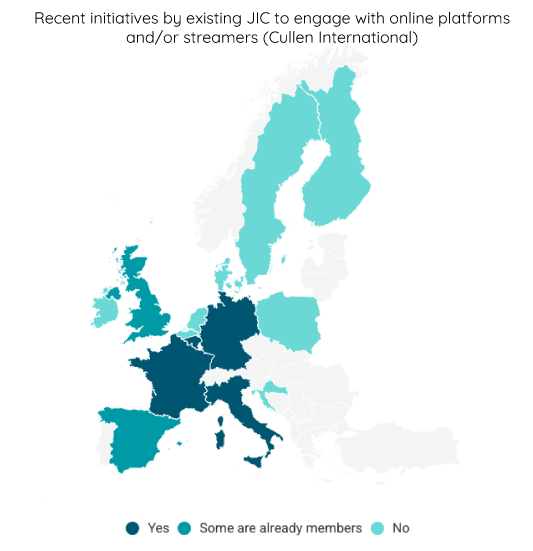
The benchmark also shows that initiatives were launched by “Joint Industry Committees” to engage with online platforms and/or streamers.
For more information and access to our research on audience measurement, please click on “Access the full content” - or on “Request Access”, in case you are not subscribed to our European Media service.
more news
21 August 26
Sustainability targets of car manufacturers
Our latest benchmark summarises the sustainability targets put in place by the major car manufacturers.
19 August 26
Regulating submarine cable infrastructure
Our latest Global Trends benchmark analyses policies and regulations of relevance to international submarine cables used for electronic communications in 17 jurisdictions around the world.
18 August 26
Countries around the world take different approaches to data centre development
Cullen International’s new benchmark provides insights into how 19 countries, including 13 in Europe, have introduced rules to incentivise and/or regulate the development of data centres.