The EU Packaging and Packaging Waste Regulation (PPWR) enters into force today. The regulation sets out rules on environmental sustainability and labelling covering the entire life cycle of packaging.
The regulation replaces the old directive, but will only apply from 12 August 2026.
New requirements include:
- 2030 and 2040 targets for a minimum percentage of recycled content (up to 65% for single use plastic bottles by 2040);
- minimising the weight and volume of packaging, and avoiding unnecessary packaging (rule on empy space ratio of 50% introduced);
- minimising substances of concern, such as per- and polyfluorinated alkyl substances (PFAS);
- restrictions on single-use plastic packaging (e.g. for pre-packed fruit and vegetables of less than 1.5 kg, single-use cosmetic and toiletry products used in the accommodation sector);
- binding re-use targets of 40% for transport and sales packaging, and 10% for grouped packaging by 2030;
- recyclability performance grades; and
- stricter labelling for packaging.
The regulation applies to all types of packaging when placed on the EU market and to all packaging waste.
The European Commission must specify further requirements concerning the regulation in harmonised standards for packaging, guidelines, and in the subsequent adoption of implementing and delegated acts.
Clients of our Sustainability intelligence can track the progress of the EU’s main environmental files using our dedicated infographic - see an extract in the following:
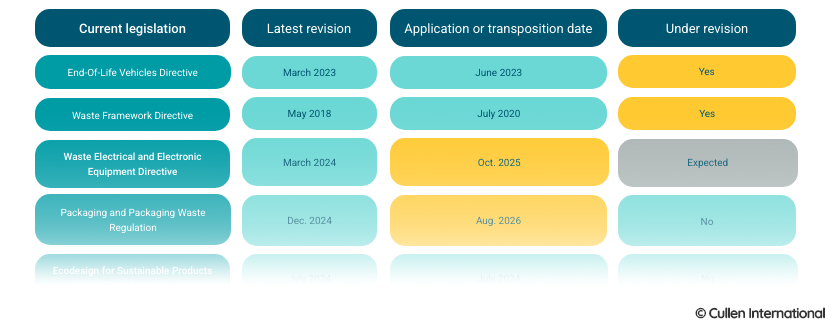
“Find out more” to request more in-depth information from our special PPWR Tracker!
Clients of our Sustainability service can “Access the full content”.
more news
14 October 26
Regulators worldwide take several distinct approaches to legally defining communications apps, authorise their operation and govern their interoperability
Cullen International's latest Global Trends benchmark for communications apps regulation found diverse regulatory approaches to the legal definition, licensing and interoperability of number-independent communications apps. The benchmark addresses regulation of apps such as WhatsApp, WeChat and iMessage across 13 jurisdictions around the world.
13 October 26
Almost half of surveyed countries in the Americas have commercial D2D satellite services
Cullen International’s latest Benchmark compares the regulatory conditions for D2D satellite services using terrestrial IMT spectrum across 12 countries in the Americas.
12 October 26
Seven of 13 European countries require opt-in for commercial calls
Cullen International's latest benchmark compares the rules on unsolicited commercial communications in 13 European countries.