Whereas content of TV channels was traditionally viewed live on television and delivered by cable, satellite, IPTV and terrestrial television, it is now increasingly being viewed online on the open internet.
Against this backdrop, there is an increasing debate on whether - and if so how - to ensure that some of this content is made visible to viewers, i.e. that they can find and access the content of these broadcasters.
The revised Audiovisual Media Services Directive allows (but does not oblige) member states to take measures to ensure the appropriate prominence of audiovisual media services of ‘general interest’.
Cullen International has published a benchmark that shows that so far, six countries (out of the 14 covered) have laws in place (or are about to introduce laws) to ensure the prominence of such content.
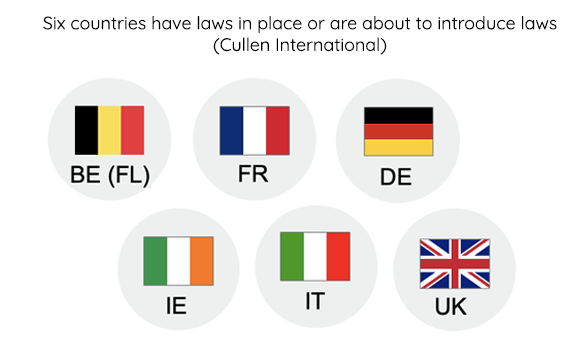
The benchmark also tracks for these countries:
- the type of content and how it is defined and chosen;
- how prominence should be ensured;
- on which platforms/services/devices it should be provided.
For more information and access to the benchmark, please click on “Access the full content” - or on “Request Access”, in case you are not subscribed to our European Media service.
more news
15 October 26
Europe: national rules continue to shape cross-border IoT connectivity
Europe is often treated as a single market for IoT connectivity but, in practice, national rules on SIM registration, numbering and authorisation still differ between countries. Cullen International's latest benchmarks examine these rules across 31 European markets.
14 October 26
Regulators worldwide take several distinct approaches to legally defining communications apps, authorise their operation and govern their interoperability
Cullen International's latest Global Trends benchmark for communications apps regulation found diverse regulatory approaches to the legal definition, licensing and interoperability of number-independent communications apps. The benchmark addresses regulation of apps such as WhatsApp, WeChat and iMessage across 13 jurisdictions around the world.
13 October 26
Almost half of surveyed countries in the Americas have commercial D2D satellite services
Cullen International’s latest Benchmark compares the regulatory conditions for D2D satellite services using terrestrial IMT spectrum across 12 countries in the Americas.